
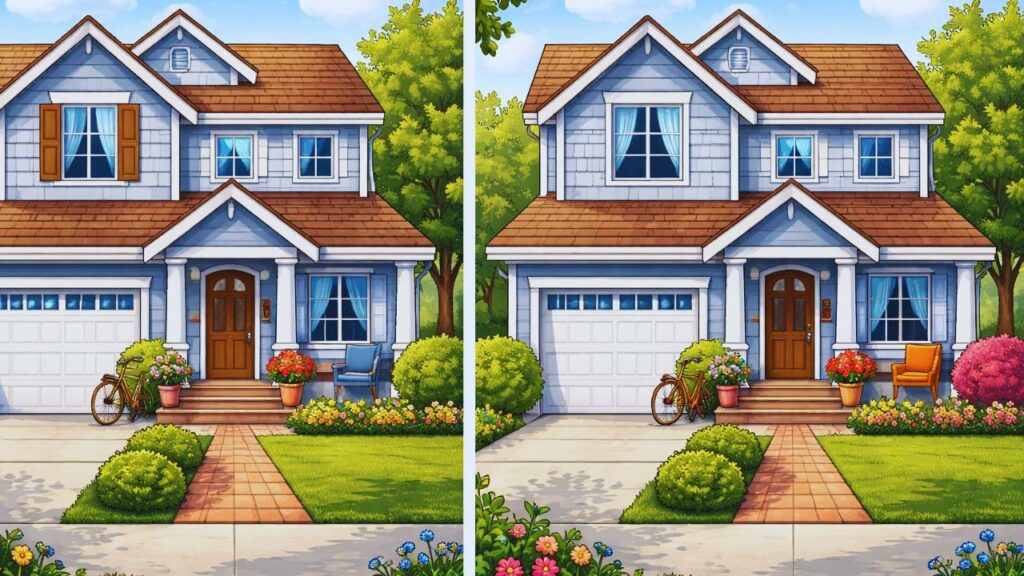
Optical illusions and spot-the-difference puzzles are popular brain teasers that people of all ages enjoy. These puzzles test how well you can observe things while challenging your mental focus & attention to detail. This article presents a 10-second challenge that will test your visual skills. Your task is to find 3 differences between two pictures of a beautiful house in just 10 seconds. You have limited time & need to work quickly.
Understanding the Visual Challenge Before You Begin
At first glance both images look almost the same. Each one shows a cheerful yellow house with a red roof surrounded by a nice garden. But these two pictures are not exactly alike. There are small changes hidden in the scenes that you need to discover. Your task is straightforward but not easy: locate 3 differences between the two images in only 10 seconds. This might sound simple at first. However the pictures look very similar & the time limit makes it harder than you might expect. These spot-the-difference puzzles help test how well you notice details. They also help you focus better and train your brain to process what you see more quickly. Are you prepared to give it a try?
Why Spot-the-Difference Puzzles Strengthen Your Brain
The Benefits of Spot-the-Difference Puzzles Playing spot-the-difference games does more than pass the time. These activities help your brain grow stronger in several important areas. When you search for small changes between two pictures you teach yourself to notice things you would normally miss. Your eyes and brain work together to catch even the smallest details. These puzzles often have time limits which pushes your brain to process what you see more quickly. The more you practice the faster you become at understanding visual information. Completing these challenges requires you to stay focused on the task. This practice helps you ignore distractions & maintain your attention for longer periods. Finding differences also builds your ability to solve problems. You start recognizing patterns and thinking more logically as you figure out what has changed between the images.
A Smarter Strategy to Solve the Puzzle
With only 10 seconds available it is important to stay calm and work in an organized way. Using a simple strategy helps you succeed. Start by looking at both images quickly to understand what they show. Then break the image into smaller parts & examine each section on its own. Look at the sky first then check the house & finally study the garden area. Pay attention to small details because differences are usually subtle. An object might be missing or something might have moved slightly from its original position. Work quickly but follow a clear pattern. Do not spend too much time staring at one spot. Keep your eyes moving across different areas of the image. The best way to improve is through regular practice. The more you do these puzzles the faster and more accurate you will become.
The Three Hidden Differences Revealed
Now that you understand the approach let’s identify the three differences between these two images of the same house.
Here’s what has changed:
1. Missing Cloud in the Sky The left image shows a small cloud positioned near the roof. This cloud does not exist in the right image.
2. Different Number of Wall Lamps Between the doors you will find two wall lamps in the left image. The right image only has one lamp because the other has been taken away.
3. Additional Garden Bush Check the bottom right area of the garden carefully. The right image contains an extra small bush that is not present in the left image.
Why These Puzzles Feel Surprisingly Tricky
Spot-the-Difference Puzzles: A Mental Challenge Spot-the-difference puzzles test your brain in interesting ways. The human mind tends to look for things that match instead of things that are different. This natural tendency makes these puzzles harder than they might seem at first. When two pictures look almost identical the brain processes them as the same image. Small changes blend into the background because your mind expects everything to match.