
The mat feels cool beneath your forearms as your toes dig in and your legs quietly strain. Your breathing evens out & becomes steady and controlled. Somewhere between the tightness in your abdomen and the focus in your mind a familiar question surfaces: how long should this be held? Ten seconds? Thirty? A full two minutes that stretches endlessly? Planks are often treated as a simple exercise with a universal answer but in reality they are a living conversation between your body and gravity that changes with time. What feels effortless at 18 becomes demanding at 48 and at 68 requires thoughtful care. At every stage of life your core foundation supports the spine and protects the back while allowing smooth and confident movement. Finding the right hold time means understanding your body exactly as it is today.
What’s Really Happening Inside Your Core During a Plank
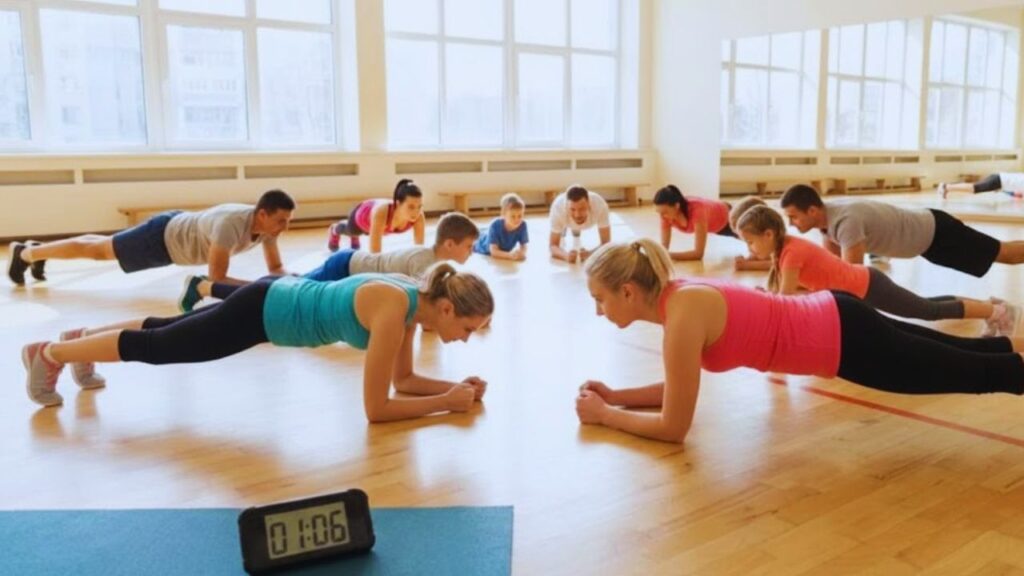
Most workouts make plenty of noise with pounding feet and clanging weights and heavy breathing filling the gym. Planks are different because they happen in silence. You position your body in a straight line with shoulders over elbows or wrists and heels pushed back and neck loose. Nothing seems to happen when someone watches you. But inside your body a lot is taking place. The transverse abdominis pulls tight like a belt around your middle while the multifidus muscles support your spine and your diaphragm matches your breathing to the work and your pelvic floor keeps everything stable underneath. These deep muscles work best when you focus on controlled movement done regularly. That explains why doing it right beats doing it long. A solid twenty-second plank with good form usually helps you more than struggling through a full minute just to prove something.
Why Holding a Plank for Two Minutes Isn’t the Real Goal
Modern fitness culture loves extremes. Two-minute holds and five-minute challenges fill social media feeds. Viral videos show people shaking under pressure. At some point longer planks started to seem better than shorter ones. The truth is less exciting. Beyond a certain duration a plank mostly teaches you to endure discomfort instead of building real strength. Coaches & studies both indicate that short controlled holds done consistently work better for core strength and spine health than occasional endurance marathons. Long planks are not necessarily bad but they become less useful as you get tired & your form starts to break down. Over time the focus should move from just lasting longer to actually supporting your body properly.
How Age and Gravity Change the Way Planks Affect Your Body
As you get older your body changes. Recovery takes longer and your tissues lose some flexibility while balance needs more focus. A plank that used to feel easy now requires real effort. This is just how biology works & not a sign of failure. Instead of following one strict rule it makes more sense to work within flexible ranges. The best time to stop holding a plank is right before your form starts to break down. Here are some practical guidelines for healthy adults without serious injuries. Think of these as helpful reference points rather than strict rules you must follow.
| Age Group | Recommended Hold Duration (Per Set) | Number of Sets | Weekly Practice Frequency |
|---|---|---|---|
| Teens (13–19 years) | 20–40 seconds | 2–4 | 2–4 days per week |
| Adults (20s–30s) | 30–60 seconds | 2–4 | 3–5 days per week |
| Midlife (40s) | 20–45 seconds | 2–4 | 3–4 days per week |
| Older Adults (50s) | 15–40 seconds | 2–3 | 2–4 days per week |
| Seniors (60s–70s+) | 10–30 seconds | 2–3 | 2–4 days per week |
Your 20s and 30s: Strength Without Restraint In early adulthood your body often feels forgiving. Recovery happens quickly and tissues stay resilient while strength develops easily. Holding a plank for thirty to sixty seconds with good form can be productive. The risk here is not weakness but ignoring subtle breakdowns. Hips dip and shoulders creep upward while the lower back quietly protests. Dividing effort into multiple shorter holds often produces better results than one long punishing attempt.
Your 40s: Strength With Awareness By the 40s feedback becomes clearer. Old injuries speak up and stiffness appears sooner. Strength remains but it demands respect. For many the most effective range sits between twenty & forty-five seconds per hold. Some days allow longer efforts while others call for restraint. The focus shifts toward sustainable strength that supports posture & spine health & daily movement for the long term.
Your 50s & 60s and Beyond: Resilient Not Reckless Later decades redefine strength. Muscle mass may decline gradually and recovery may slow but adaptation remains possible. Planks continue to offer value even when modified. Shorter holds of ten to thirty seconds performed with excellent alignment are highly effective. Knee planks or incline planks are not compromises but smart adjustments that protect joints while maintaining core engagement.
Recognizing the Right Moment to End a Plank Safely
Your body will tell you when a plank stops being useful and starts becoming dangerous. If your lower back begins to sag or your shoulders creep up toward your ears or you hold your breath or your face tenses up then you need to stop. Stopping when your form starts to break down is not giving up. It is smart training. This method helps you build better technique over time instead of wearing yourself out.